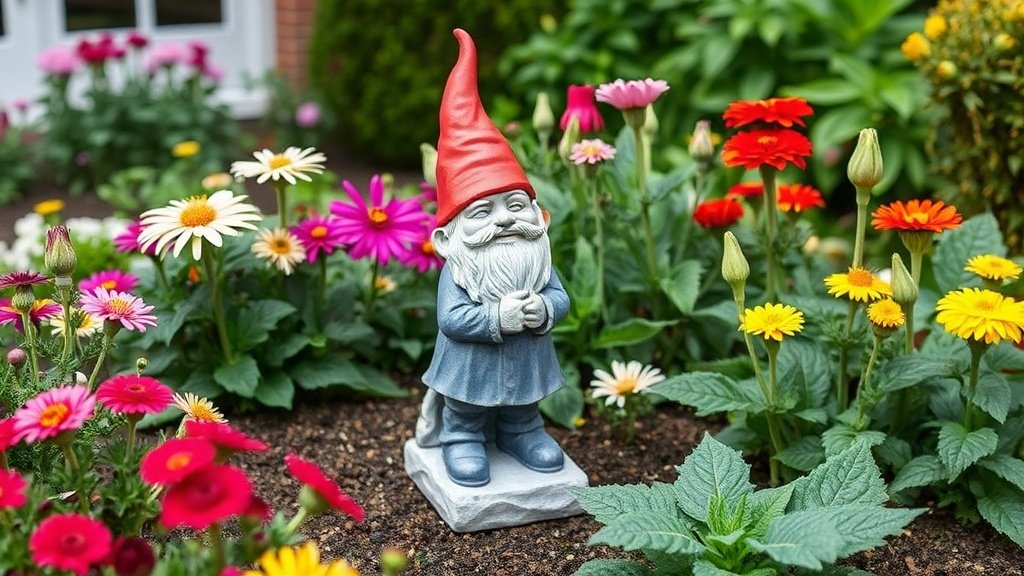
Finding the Balance Between Hardscape and Horticulture
Garden statues bring personality, charm, and a sense of wonder to any outdoor space. However, placing them too close to your blooms can suffocate delicate foliage and disrupt the natural flow of your landscape. The secret to a stunning garden lies in balancing your favorite pieces with the living plants that make your flower bed thrive.
When you style garden statues around a flower bed, the goal is to create focal points rather than obstacles. Thoughtful placement lets your plants get the sunlight and airflow they need while ensuring your statues get the attention they deserve.
Assess Scale and Proportion First
Before placing any sculpture or figurine, look at the scale of your flower bed. Large, heavy statues can easily overpower a narrow strip of annuals, while tiny accents get completely lost in a sea of towering perennials.
- For large beds: Anchor the corners or the center with a substantial statue, ensuring it has breathing room from surrounding shrubs.
- For small beds: Opt for petite garden statues that peek out gently from beneath low-growing ground cover without blocking sunlight.
A good rule of thumb is to let your plants dictate the height. Your statues should either nestle comfortably beneath the plant canopy or stand tall enough to serve as a backdrop.
Use the Rule of Thirds and Asymmetry
Symmetry feels formal and structured, but asymmetry often looks more natural in a flourishing garden. Instead of placing matching statues on opposite sides of a bed, try grouping them using the rule of thirds.
Position your primary statue slightly off-center within the flower bed. Then, use smaller elements—like stepping stones, small lanterns, or secondary figurines—to balance the visual weight on the opposite side. This technique draws the eye smoothly across the entire bed instead of trapping it in one spot.
Create Negative Space to Protect Plant Health
Plants need room to grow, spread, and breathe. Crowding a statue right up against the base of a hosta or a clump of coneflowers traps moisture against the leaves and restricts root expansion.
Leave at least six to twelve inches of negative space around the base of your statues. This gap not only keeps your plants healthier by preventing fungal issues from trapped humidity, but it also makes routine weeding and mulching much easier.
Layering Your Display from Front to Back
Flower beds are naturally layered, with low borders in the front and tall plants in the back. Your statues should follow this same architectural rule.
Front-Border Placement
Small figurines work wonderfully right at the edge of a flower bed, just where the soil meets the lawn or pathway. Keep them low to the ground so they don’t block the view of the blooming flowers behind them.
Mid-Bed and Background Placement
Medium to large statues fit best tucked into the middle or rear of the bed. Let taller perennials like ornamental grasses or delphiniums frame the statue, creating a living frame that highlights the piece naturally throughout the growing season.
Letting Statues Guide the Eye
Statues can serve as silent guides for anyone walking through your yard. Angle figurines so they face toward pathways or open lawn areas rather than staring blindly into a dense wall of foliage. This simple adjustment makes your garden feel more inviting, intentional, and harmonious, allowing both your plants and your decor to shine.